The Empty Chair at the Table: Honoring Loved Ones During the Holidays

The Empty Chair at the Table: Honoring Loved Ones During the Holidays
The holidays are often described as the most wonderful time of the year. They’re filled with traditions, family gatherings, familiar recipes, laughter, and memories. For many of us, they’re a time we look forward to all year long. But what happens when someone who has always been part of those memories is no longer here?
Sometimes, the holidays don’t feel quite as magical as they once did.
Sometimes, there’s an empty chair at the dinner table, a familiar voice missing from the conversation, or a tradition that suddenly feels different. The things that once brought us comfort can become painful reminders of someone we wish were still here.
This year, I’m experiencing that reality myself.
I recently lost my grandma, and as the holiday season approaches, I’ve found myself thinking about what it means to celebrate without someone you love. As a therapist, I’ve spent a lot of time helping others navigate grief, understand their emotions, and find ways to move forward after loss. But experiencing grief personally has reminded me of something important: Understanding grief doesn’t make us immune to feeling it.
We can understand the grieving process, recognize that our emotions are normal, and know all the coping strategies in the world. Yet none of that necessarily prepares us for the moments when someone’s absence becomes painfully real.
And sometimes, those moments happen when everyone around us is celebrating.
Why Does Grief Feel Heavier During the Holidays?
Grief doesn’t follow a calendar, but certain times of the year can make it feel more noticeable.
The holidays are deeply connected to our memories, relationships, and traditions. We associate them with familiar faces, shared experiences, and the people who have helped make those moments meaningful.
When someone dies, those associations don’t simply disappear.
You might find yourself reaching for your phone to tell them something, remembering a dish they always made, or realizing that a holiday tradition will never look exactly the same.
Even something as simple as hearing a familiar Christmas song or seeing a particular decoration can bring back memories you weren’t expecting.
And while those memories can be comforting, they can also hurt.
There’s also an unspoken expectation that the holidays are supposed to be happy. We’re surrounded by messages encouraging us to be grateful, joyful, and present with our loved ones.
But what if you’re struggling to feel any of those things?
What if you’re grateful for the people who are still here but heartbroken over the person who isn’t?
One of the most important things I remind clients is that two things can be true at once.
You can appreciate the people sitting around your table while grieving the person whose chair is empty.
You can feel grateful for the memories you have while wishing desperately that you could make more.
You can experience happiness and sadness in the same moment.
None of those emotions cancel each other out.
Grief Isn’t Something We Simply Move On From
One of the biggest misconceptions about grief is that healing means eventually reaching a point where the loss no longer hurts.
We often hear phrases like “time heals all wounds” or “they would want you to be happy.” While these statements are usually well-intentioned, they can unintentionally create pressure to move through grief faster than we’re ready to.
The reality is that grief isn’t linear.
Some days, you might feel like you’re doing okay. You go to work, spend time with friends, laugh at something funny, and feel a sense of normalcy returning.
Other days, something seemingly insignificant brings the sadness rushing back. That doesn’t mean you’ve taken a step backward. It means you’re grieving.
As a therapist, I often encourage people to think about grief not as something we need to overcome, but as something we learn to carry.
Our relationship with grief may change over time. The emotions might become less overwhelming, the memories may begin to bring more comfort than pain, and we may find ourselves adjusting to a life that looks different than the one we imagined.
But that doesn’t mean the love disappears.
In fact, one of the reasons grief can be so painful is because the relationship was so meaningful.
We grieve because we loved, and that love doesn’t end simply because someone’s life has.
Making Room for Both Grief and Joy
Something I’ve been reflecting on since losing my grandma is how complicated it can feel to experience happiness while grieving. There’s sometimes an underlying sense of guilt that comes with enjoying ourselves after a loss.
Maybe you laugh during a family gathering and immediately feel sad because the person you lost isn’t there to share that moment. Maybe you find yourself looking forward to a holiday tradition, only to question whether you should be excited when you’re still grieving.
But experiencing joy doesn’t mean you’re forgetting someone. It doesn’t mean you miss them any less. And it certainly doesn’t mean you’ve stopped loving them.
One concept we discuss in grief counseling is the idea that people can move between focusing on their loss and engaging with everyday life. Some moments are spent remembering, missing, and processing the absence of a loved one. Other moments involve reconnecting with routines, relationships, and experiences that bring meaning to our lives.
Both are important parts of adapting to loss.
You don’t have to choose between honoring someone’s memory and continuing to experience life. You can do both. You can cry when you remember them and laugh when someone shares a funny story about them. You can acknowledge how much you wish they were there while still appreciating the people who are.
Allowing yourself to experience happiness isn’t a betrayal of your grief. It’s a reminder that your life can continue to hold meaning, even alongside loss.
Finding Ways to Keep Their Memory Alive
One of my favorite concepts in grief counseling is something called continuing bonds.
For a long time, grief was often discussed in terms of letting go, finding closure, or moving on. However, the continuing bonds perspective recognizes that our relationships with loved ones don’t necessarily end when they die.
Instead, those relationships can change.
We may no longer be able to call them, hug them, or spend the holidays together, but we can still maintain a meaningful connection through memories, traditions, values, and the ways they’ve influenced our lives.
And the holidays can provide opportunities to honor those connections.
For some families, that might mean preparing a loved one’s favorite holiday dish or continuing a tradition they always enjoyed. For others, it might mean lighting a candle, displaying a photograph, sharing favorite memories, or setting aside a moment to acknowledge their absence. It could be something as simple as telling a story that makes everyone laugh because it reminds them so much of the person they’ve lost.
There’s no right or wrong way to honor someone’s memory. And you don’t have to create an elaborate tradition for it to be meaningful. Sometimes, remembering is enough.
I think one of the most beautiful things about the people we love is how much of them stays with us. Their sayings, their recipes, their advice, their humor, and even the little habits we picked up from them can continue to show up in our lives long after they’re gone.
We may lose someone’s physical presence, but we don’t lose the impact they had on who we are.
Giving Yourself Permission to Do the Holidays Differently
If you’re grieving this holiday season, I want you to know something:
You don’t have to do everything the way you’ve always done it.
Sometimes, we feel obligated to maintain traditions because they’ve always been part of our family celebrations. We worry that changing something might disappoint others or somehow dishonor the person we’ve lost.
But grief changes things, and it’s okay to acknowledge that. Maybe hosting Thanksgiving feels overwhelming this year. Maybe you don’t have the emotional energy to attend every holiday gathering. Maybe putting up decorations feels comforting, or maybe the thought of unpacking them feels unbearable.
You are allowed to make those decisions based on what you need. You can keep the traditions that bring you comfort and change the ones that feel too painful. You can set boundaries with family members who may have different expectations about how the holidays should look. You can step outside for a few minutes if your emotions become overwhelming. You can also change your mind.
Something that feels manageable today might feel difficult tomorrow, and that’s okay. One thing I often remind clients is that healing doesn’t require us to ignore our emotional needs to make other people comfortable. And that applies to grief, too.
You don’t owe anyone a cheerful version of yourself simply because it’s the holiday season.
Supporting Someone Who Is Grieving During the Holidays
If someone you love is experiencing grief this holiday season, you might find yourself unsure of what to say or do. It’s natural to want to make things better, especially when we’re watching someone we care about struggle. But grief isn’t a problem that needs to be solved.
Sometimes, the most meaningful thing we can offer someone is the opportunity to feel whatever they’re feeling without judgment. Rather than trying to cheer them up or redirect their attention away from their loss, consider simply acknowledging it.
You might say, “I know this holiday might feel different without them. I’ve been thinking about you.” You could ask whether they’d like to incorporate a special tradition to honor their loved one. Or you might simply sit with them when they’re having a difficult moment.
One thing I think we sometimes overlook is how meaningful it can be to hear someone else mention the person we’ve lost. People may avoid bringing up a loved one’s name because they’re afraid of making us sad. But for many grieving individuals, hearing that someone else remembers can be incredibly comforting.
Of course, everyone experiences grief differently, so it’s important to follow their lead. They may want to share stories, or they may not feel ready. They may want company, or they may need some time alone. The goal isn’t to take away their grief. It’s to remind them that they don’t have to carry it alone.
The Love That Remains
As I prepare for my first holiday season without my grandma, I know there will be moments that feel different. There will likely be memories that make me smile and others that bring tears. There may be moments when I feel her absence more strongly than I expect.
And even as a therapist, I know I won’t always have the perfect response to those feelings. But I’m learning to give myself the same compassion I encourage my clients to extend to themselves.
I’m reminding myself that I don’t have to rush through grief, that I can miss someone and still find moments of happiness, and that honoring someone’s memory doesn’t require me to remain stuck in sadness. I think that’s something worth remembering as we enter the holiday season.
The empty chair at the table may remind us of someone we wish were still here. It may represent conversations we’ll never have, traditions that have changed, and moments we wish we could experience one more time. But it can also represent something beautiful. A life that mattered. A relationship that shaped us. A love that continues to exist through the memories we carry and the ways we choose to remember.
Maybe honoring our loved ones during the holidays isn’t about finding a way to make their absence hurt less. Maybe it’s about making room for that absence while still allowing ourselves to experience the love, connection, and meaning that remain.
Because even when someone is no longer sitting at the table, they can still have a place in our hearts, our memories, and our traditions.
And sometimes, that’s how we continue to carry them with us.
Finding Support During the Holiday Season
If you’re struggling with grief this holiday season, you don’t have to navigate it alone. Grief can be complicated, overwhelming, and sometimes isolating, especially during a time of year when we’re surrounded by expectations of happiness.
Therapy can provide a space to process your loss, explore the emotions that come with it, and find ways to honor your loved one while adjusting to life without their physical presence.
At New Light Counseling, we recognize that everyone’s experience with grief is unique. Whether your loss is recent or happened years ago, your feelings deserve space, compassion, and understanding.
You don’t have to have everything figured out, and you don’t have to wait until you’re struggling to ask for support.
Grief is a reflection of love, and you deserve support as you learn to carry both.
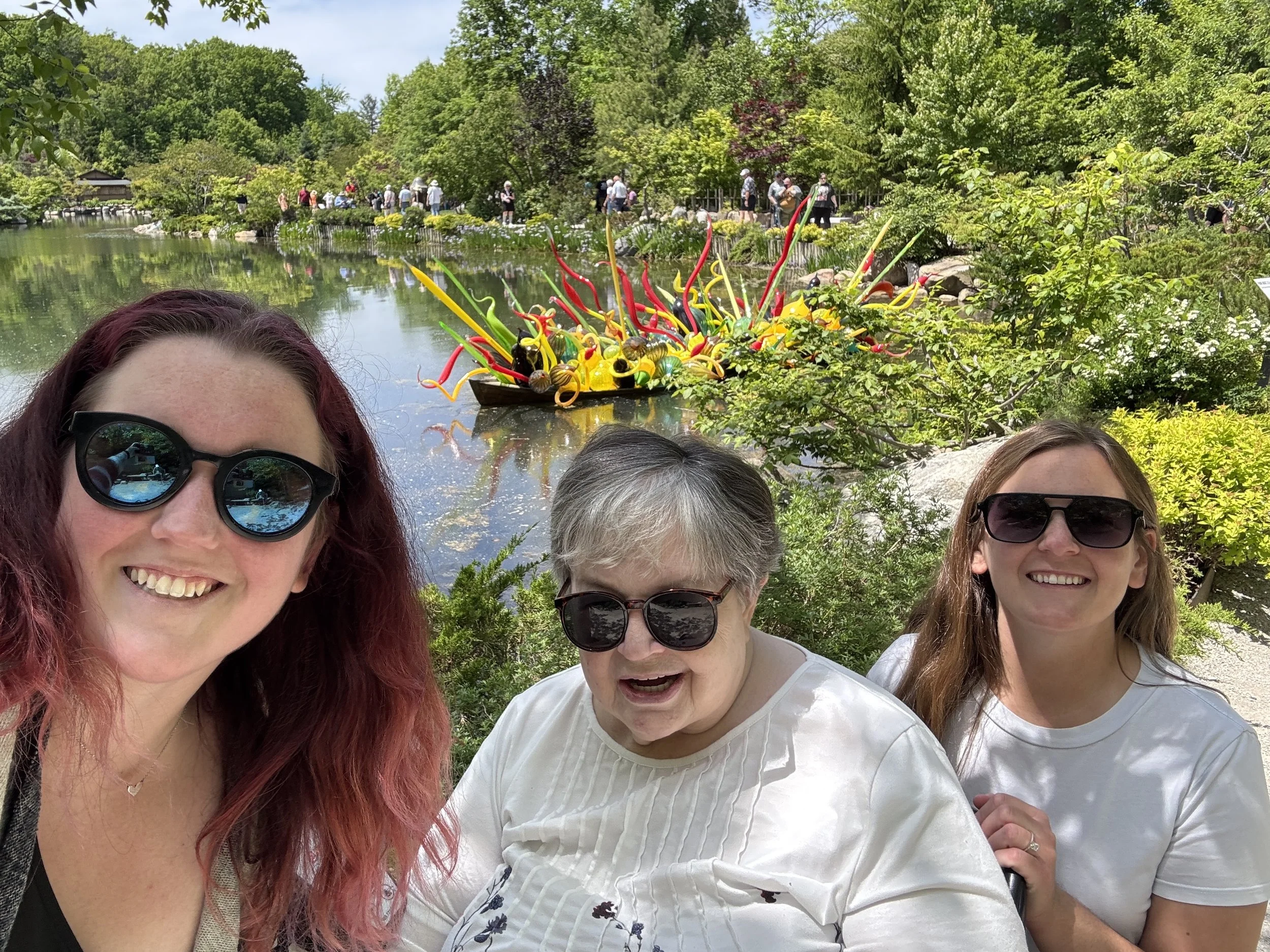
In Loving Memory of My Grandma
This blog is dedicated to my grandma, whose love and presence will forever be a part of my life. As I navigate my first holiday season without her, I’m reminded that grief is simply love with nowhere familiar to go. While I wish we had more time, I’m forever grateful for the memories we made and the love we shared. Her absence will be felt in so many moments, but so will her love.
I miss you, Gram. This one’s for you.